
From the 30-Sensex firms, NTPC, Trent, Bajaj Finance, Power Grid, Maruti, State Bank of India, ICICI Bank and Bharat Electronics were among the biggest gainers. In contrast, ITC, Kotak Mahindra Bank, Titan Company, Axis Bank and Bharti Airtel were the laggards.

From the Sensex firms, Bharat Electronics, Bajaj Finance, Bajaj Finserv, Axis Bank, Maruti and Tata Motors were among the gainers. However, Eternal, Hindustan Unilever, Trent and Titan were the major laggards.

Equity mutual fund (MF) schemes were flush with cash at the start of this month, even as fresh investments shrank in February. As of February 28, equity schemes from the top 20 fund houses held 6.8 per cent of their portfolios in cash, up from 6.1 per cent in January and 5.9 per cent in December 2024, according to a report by Motilal Oswal Financial Services.

Equity benchmark indices Sensex and Nifty tumbled in early trade on Monday amid heightened tensions in the Middle East after the US bombed three major nuclear sites in Iran. The 30-share BSE Sensex tumbled 705.65 points to 81,702.52 in early trade. The 50-share NSE Nifty dropped 182.85 points to 24,929.55.

From the Sensex firms, Tech Mahindra, Tata Consultancy Service, Infosys, HCL Tech, Tata Motors, Trent, Reliance Industries and Larsen & Toubro were among the major laggards. However, Eternal, Bajaj Finance, Adani Ports and UltraTech Cement were among the gainers.

Prism, the parent firm of global travel tech unicorn Oyo, has filed preliminary papers with market regulator Sebi to raise Rs 6,650 crore through an initial public offering (IPO) using a confidential route, people familiar with the development said on Wednesday.

The US Fed interest rate decision, trading activity of foreign investors and quarterly earnings from corporates would largely drive the momentum in the equity market this week, analysts said. Escalating tensions between India and Pakistan over the Pahalgam terror attack will also remain on investors' radar, they added.

From the 30-Sensex firms, Tata Steel, Asian Paints, Trent, State Bank of India, Hindustan Unilever, UltraTech Cement, ICICI Bank and Bharti Airtel were among the gainers. On the other hand, Infosys, Bajaj Finance, Bharat Electronics, Larsen & Toubro and HDFC Bank were the laggards.

Eighteen new-age technology firms went public during the year, a near triple increase from the five firms that debuted in 2023 and 38 per cent more than 2024's tally of 13.

The exodus of FPIs from the Indian equity markets continues unabated, as they withdrew Rs 64,156 crore ($7.44 billion) this month so far on depreciation of the rupee, rise in the US bond yields and expectation of a tepid earning season. This came after an investment of Rs 15,446 crore in the entire December, data with the depositories showed.

Mutual fund investment through systematic investment plans (SIPs) has surged to an all-time high of Rs 3.34 lakh crore in 2025, driven by growing investor appetite for disciplined, long-term wealth creation.

This exercise allows investors to realign their portfolios with changing market conditions and evolving personal objectives.

Recent developments - proposed changes to the goods and services tax (GST) rates and S&P Global Ratings' upgrade of India's long-term sovereign credit rating to BBB, with a stable outlook, - may not be enough to bring foreign investors back to Indian markets in a rush, feel analysts.
Among Sensex firms, Trent, ICICI Bank, Tech Mahindra, Bajaj Finserv, Mahindra & Mahindra, Power Grid, Tata Consultancy Services and Bajaj Finance were the major laggards. However, Tata Steel, Larsen & Toubro, State Bank of India, Kotak Mahindra Bank were among the major gainers.

Ask rediffGURU Reetika Sharma your insurance, mutual fund and personal finance-related questions.

Domestic equity markets are in elite company. In May, Indian markets joined select developed markets (DMs) such as the US, UK and Germany to record new all-time highs. Among emerging markets (EMs), Brazil is the other market to have logged new highs this month. Asian peers such as South Korea, Taiwan and New Zealand are currently between 2 per cent and 10 per cent below their previous highs made earlier this year. The domestic markets were among the worst-performing major global markets in April amid a lethal second-wave of covid-19 infections.

Sometimes, the most powerful Budgets whisper and the wisest investors listen, notes Ramalingam Kalirajan.
From the Sensex pack, HCL Tech, Infosys, Tech Mahindra, Reliance Industries, Bajaj Finserv, ICICI Bank, Tata Motors and Eternal were the lead gainers. Power Grid, Adani Ports, IndusInd Bank, Nestle, HDFC Bank and Hindustan Unilever were among the laggards.

From the 30-Sensex firms, Larsen & Toubro, Tech Mahindra, Tata Consultancy Services, Reliance Industries, Tata Steel, and Trent were among the biggest laggards. On the other hand, Eternal, ICICI Bank, Bajaj Finance, and Bharat Electronics were the gainers.

Foreign investors withdrew Rs 10,355 crore from the country's equity markets in the last four trading sessions this month due to sweeping tariffs imposed by the US on most nations, including India. The outflow occurred after a net investment of Rs 30,927 crore in the six trading sessions from March 21 to March 28. This infusion helped reduce the overall outflow for March to Rs 3,973 crore, according to data from the depositories.

Foreign investors have pulled out Rs 31,575 crore from the country's equity markets so far this month, in the wake of turbulence emanating from sweeping tariffs imposed by the US on most nations, including India. This came following a net investment of Rs 30,927 crore in the six trading sessions from March 21 to March 28. This infusion helped reduce the overall outflow for March to Rs 3,973 crore, according to data from the depositories.
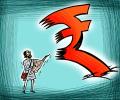
The rupee plunged 26 paise to an all-time low of 90.75 against the US dollar in intra-day trade on Monday, weighed down by uncertainty over an India-US trade deal and persistent foreign fund outflows.

In the 15 Union Budget presentation days of the Narendra Modi government since it came to power in 2014, the BSE benchmark Sensex has ended in negative territory eight times.

With average returns of 18 per cent over the past year, listed real estate investment trusts (Reits) have clearly outperformed both the Nifty Realty index and the Sensex. Over the same period, Nifty Realty fell 15.5 per cent, while the benchmark index was largely unchanged. Steady office leasing, the Securities and Exchange Board of India's (Sebi's) decision to reclassify Reits as equity instruments, and ongoing portfolio expansion have strengthened the sector's appeal.

In an eventful week ahead, stock market investors will take cues from major events like the US Federal Reserve's interest rate decision, the upcoming Union Budget and Q3 earnings, analysts said.

Overall economic activity continued to hold up in November with demand conditions remaining robust, thanks to strengthening urban demand, but manufacturing and rural demand showed some signs of deceleration even as services remained strong, according to an article on the State of the Economy written by Reserve Bank of India (RBI) officials in the central bank's December bulletin.

The "huge mountain of debt" in developed economies and the risk of a possible unravelling is a matter of concern for India, Union Minister for Railways, Information & Broadcasting, Electronics & Information Technology Ashwini Vaishnaw said on Wednesday, pointing to the recent spike in Japanese bond yields.

From the 30-Sensex firms, ITC tanked 9.69 per cent, following Bajaj Finance, Asian Paints, Bharat Electronics and ICICI Bank. In contrast, NTPC, Eternal, Mahindra & Mahindra, Larsen & Toubro and Power Grid were among the gainers.
Among Sensex firms, Tata Consultancy Services, Tech Mahindra, Axis Bank, Bajaj Finance, Eternal, Infosys, Kotak Mahindra Bank and Bajaj Finserv were the major gainers. However, Tata Steel, Adani Ports, Power Grid and Titan were among the laggards.

Finance Minister Nirmala Sitharaman's biggest challenge will be to find a new growth driver, particularly against the backdrop of a global economy ravaged by heightened uncertainty and fragmentation, financial markets on a precipice, and global commodity prices on a continued uptrend.
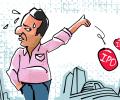
India's equity markets may have expanded rapidly, but initial public offerings (IPOs) are increasingly becoming exit vehicles for early investors rather than as engines for raising long-term capital, a shift that undermines the spirit of public markets, Chief Economic Advisor V Anantha Nageswaran warned on Monday at a CII event.

Among Sensex firms, Hindustan Unilever dropped the most by 3.20 per cent. UltraTech Cement, Kotak Mahindra Bank, Adani Ports, Titan, HDFC Bank and Axis Bank were also among the laggards. However, Bharti Airtel, ICICI Bank, Bharat Electronics and Sun Pharma were among the gainers.

Ravi Kaushik has sold 70,000 units of air filters through his start-up Airth and aims to sell 10 lakh units in the next five years.

From the Sensex firms, Mahindra & Mahindra, Maruti, Adani Ports, Bajaj Finserv, Titan, and HDFC Bank were among the major laggards. However, Hindustan Unilever, Trent, HCL Tech, Asian Paints, and Tata Steel were among the gainers.

Securities and Exchange Board of India (Sebi) Chairman Tuhin Kanta Pandey on Thursday called for sharper disclosures in IPO (initial public offering) offer documents, particularly around risk factors, valuation rationale, objects of the issue, and utilisation of proceeds.

India's third-largest telecom operator Vodafone Idea (Vi) has secured a 10-year breather on adjusted gross revenue (AGR) payments from the Department of Telecommunications (DoT). This is expected to ease pressure on its balance sheet and enable the company to raise bank debt for capital expenditure.
Among Sensex firms, Maruti, Axis Bank, Larsen & Toubro, ICICI Bank, Bharti Airtel, Infosys, Adani Ports and Hindustan Unilever were the laggards. However, Titan, State Bank of India, Eternal and Trent were among the major gainers.
The milestone crowns a record year for the domestic primary market where IPO mobilisation is set to cross Rs 1.7 trillion.

India and the European Union are set to announce on January 27 the conclusion of negotiations and finalisation of a free trade agreement, which is aimed at boosting economic ties between the two regions amid disruptions in global trade due to US tariffs, an official said.

'Geopolitics will be the most important driver of financial markets in 2025.'
 © 2026 Rediff.com - Advertise with us - Disclaimer - Privacy Policy - Sitemap - Feedback - About us - Terms of use - Grievances